
Blended Learning, Domestic, For-Profit, International, K-12, Private, Required, Technology - Written by Wired Academic on Thursday, December 6, 2012 7:27 - 0 Comments
Avenues: The World School Opens To Fanfare & Critics Of Elitist High-Tech
 Trey Ratcliff via Compfight (photo illustration, not the actual school building)
Almost every aspect of Avenues involves cutting-edge technology, from audio-sensitive cameras on the walls intended to connect classrooms around the world to the replacement of most physical textbooks with multimedia versions accessible only on iPads (and frequently created by teachers). All students at the nursery school to 12th grade school have access to iPads, but starting in fifth grade, all are equipped with an iPad and a MacBook Air—an approach that some experts called unprecedented and, perhaps, redundant.
There are 6,000 physical books at Avenues, but an additional 70,000 books, magazines and databases are available digitally, with plans to expand both collections. “Yes, there are students who love that physical book,” said Alia Methven, director of library services. “but that instant access of the virtual books is very appealing.”
…
To be sure, Avenues may not be a model for cash-strapped school districts across the country. It raised $75 million from private donors before opening its doors and invested $2 million on technology infrastructure. The program’s operating budget, not including salaries, is $1 million and is funded in part by an annual $2,000 fee charged to every family on top of the school’s $39,750 tuition (the fee also covers lunch and other items)
….
Avenues officials said they viewed the school as a training ground for Internet use in college and beyond—and part of that is teaching students how to wield that freedom wisely. Each middle school student takes a yearlong class in digital citizenship. The idea isn’t to bust students for playing prohibited video games but to teach them responsible online behavior. For that reason, few websites are blocked, but usage is monitored. Emails aren’t regularly checked although officials reserve the right to do so.
Jenny Anderson writes an earlier story in The New York Times:
The founders say students at Avenues will learn bilingually, immersed in classrooms where half of the instruction will be in Spanish or Mandarin, the other half in English, from nursery school through fourth grade. The school will be part of a network of 20 campuses around the world with roughly the same curriculum. If Mom and Dad move to London, little Mateo doesn’t have to find a new school, or maybe even miss any class. When Sophia is in middle school, she can spend her summers in Shanghai, and when she’s in high school, she can globe-trot by semester. Avenues will foster “mastery,” finding students’ passions early and building on them.
“Schools need to do a better job preparing children for international lives,” Mr. Whittle said. He and his team call themselves “fervent evolutionaries,” purposefully shying away from the r-word since, as they (now) acknowledge, most parents aren’t too keen to mix “revolution” and “my children.”
The result, they believe, will be a school where Singapore math and British geography collide with Juilliard-level violin instruction, in 20 shining schools around the world. It is a vision that many parents have embraced….
Detractors are equally easy to find, though they are loath to go on the record, because they have applied — or might. They wonder whether an untested curriculum will get their kids into college. They worry about Avenues’ for-profit status driving decision-making. Many are dubious that the building will be completed on time, and they are even more doubtful that Avenues will be able to open two schools a year around the world starting in 2014.
The Economist writes:
THE first time he tried to create the “next generation of schools”, back in the early 1990s, Chris Whittle’s focus was on improving the education of the poorest pupils in America’s worst-performing public schools. Although in doing so the perennially bow-tied entrepreneur from Tennessee helped pioneer the charter-school movement, his Edison Project ultimately failed to thrive as a business. Now, with Benno Schmidt and Alan Greenberg, he is trying to reinvent education for bright, rich kids. On September 10th “Avenues: The World School”, the first of a planned global network, will welcome 700 pupils into a lavishly converted warehouse next to Manhattan’s popular High Line park. Their parents will typically pay just under $40,000 a year (in line with New York’s established top-tier private schools), having been promised cutting-edge technology and everything else to match.
Getting this far has not been easy for Mr Whittle, who says he has had to become “one third educator, one third real-estate developer, and one third investment banker.” After conceiving the idea in 2007 of creating a chain of similar schools in the world’s leading cities, the financial crisis robbed him of funding, a business partner and the intended first Manhattan site. Eventually he raised the $75m needed to get the first school up and running, found another site, and then toured the world to recruit staff and pupils. Many of the teaching staff have previously worked at other elite east-coast private schools, including Phillips Exeter, Hotchkiss and Dalton. (Even more gratifying than the 2,600 applications to attend Avenues were the 4,900 applications it received to teach there, says Mr Whittle.)
Via The Economist

Campus Buzz
We welcome Tips & Pitches

Latest WA Original Features
-
Jörn Loviscach: A German Math Teaching Sensation Emerges On YouTube & Udacity
-
Open University Enters Battle Of The MOOCs, Launches “FutureLearn”
-
Alvaro Salas As A Case Study In Crowd-Funding An Ivy-League Education
-
Jonathan Mugan: How To Build A Free Computer Within A Computer For Your Child
-
WGU Texas & Three Community Colleges Develop Individual-Paced College Courses
Paul Glader, Managing Editor
@paulglader
Eleni Glader, Policy Editor
Elbert Chu, Innovation Editor
@elbertchu
Biagio Arobba, Web Developer
@barobba
Ravi Kumar, Reporter & Social Media Editor
@ravinepal
Contributors:
Michael B. Horn
@michaelbhorn
Derek Reed
@derekreed
Annie Murphy Paul
@AnnieMurphyPaul
Frank Catalano
@FrankCatalano
Ryan Craig
@UniVenturesFund
Jonathan Mugan
@JMugan
Terry Heick
@TeachThought
Alison Anderson
@tedrosececi

The Pulitzer Prize winning investigation newsroom digs into for-profit education.
-
Most Viewed
- Inside Ashford University: A former staffer talks to WiredAcademic
- Pearson Llc + Google Expands LMS Business With "OpenClass" System
- Guest Column: Why Steve Jobs would have loved digital learning
- Terry Heick: The iPad's Past, Present & Future In Learning Environments
- Citing IT Skills Shortage, IBM Wants To Expand Presence At Universities
-
MARKET INTRADAY SNAPSHOT
- Education & Tech Companies We Follow
| APEI | 37.46 |  0.00 0.00 | +0.00% | ||
| APOL | 20.33 |  -0.03 -0.03 | -0.15% | ||
| AAPL | 503.3002 |  +17.3802 +17.3802 | +3.58% | ||
| BPI | 10.08 |  -0.29 -0.29 | -2.80% | ||
| CAST | 0.07 |  +0.009 +0.009 | +14.75% | ||
| CECO | 3.40 | 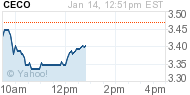 -0.11 -0.11 | -3.13% | ||
| COCO | 2.53 | 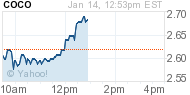 -0.10 -0.10 | -3.80% | ||
| CPLA | 27.66 | 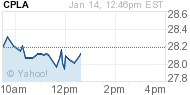 -0.48 -0.48 | -1.71% | ||
| DV | 24.015 | 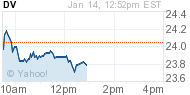 -0.375 -0.375 | -1.54% | ||
| EDMC | 3.77 | 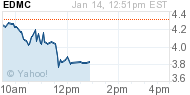 -0.02 -0.02 | -0.53% | ||
| ESI | 14.56 | 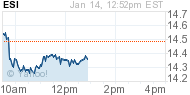 -0.18 -0.18 | -1.22% | ||
| GOOG | 715.92 | 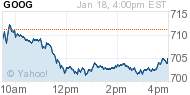 -9.01 -9.01 | -1.24% | ||
| LINC | 5.12 | 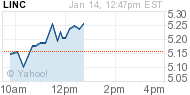 -0.07 -0.07 | -1.35% | ||
| LOPE | 23.10 |  -0.03 -0.03 | -0.13% | ||
| PEDH | 0.45 |  0.00 0.00 | +0.00% | ||
| PSO | 19.4538 |  -0.1962 -0.1962 | -1.00% | ||
| SABA | 9.492 |  +0.222 +0.222 | +2.39% | ||
| SCHL | 28.89 | 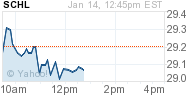 -0.08 -0.08 | -0.28% | ||
| STRA | 54.31 | 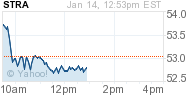 -0.25 -0.25 | -0.46% | ||
| WPO | 379.99 | 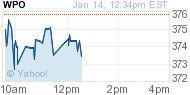 +3.21 +3.21 | +0.85% |
Domestic, Education Quality, For-Profit, Friend, Fraud, or Fishy, Graduate, International, Private, Public, Regulatory, Required, Universities & Colleges - Jan 14, 2013 6:00 - 0 Comments
Ryan Craig: American Clampdown Forcing Forlorn For-Profit Colleges To Look Abroad
More In For-Profit
- How For-Profit Colleges Major In Marketing & Fail Education
- Infographic: A Graphical Profile Of Today’s Online College Student
- Infographic: A Comparison Of For-Profits v. Non-Profit Online College Data
- Opinion: How “Shareholder Value” Is Destroying For-Profit, Career Colleges
- Avenues: The World School Opens To Fanfare & Critics Of Elitist High-Tech
Blended Learning Domestic For-Profit International K-12 Private Required Technology
Infographics, Open Source Education, Required, Technology - Jan 12, 2013 9:25 - 0 Comments
Infographic: How to Search for Free Open Education Resources Online
More In Technology
- Tom Vander Ark: Canvas.net Shifts The MOOC Model Paradigms
- Columnist Annie Murphy Paul Predicts How Education Will Change In 2013
- Tom Vander Ark’s List Of Top 12 Papers On Digital, Blended & Competency Learning From 2012
- Teacher’s Voice: Alison Anderson On Launching Digital Magazines In Classrooms With Zeen.com
- Jörn Loviscach: A German Math Teaching Sensation Emerges On YouTube & Udacity
Blended Learning Education Quality Faculty Feature Flipped Classrooms Foreign Expansion International Interview Math MOOCs Open Source Education Personalized Learning Required Science Startups STEM Teachers Technology top Universities & Colleges
Domestic, Education Quality, For-Profit, Friend, Fraud, or Fishy, Graduate, International, Private, Public, Regulatory, Required, Universities & Colleges - Jan 14, 2013 6:00 - 0 Comments
Ryan Craig: American Clampdown Forcing Forlorn For-Profit Colleges To Look Abroad
More In Friend, Fraud, or Fishy
- Opinion: The Problem With Deceptive Degree Aggregators In The Search For Online Courses & Degrees
- How For-Profit Colleges Major In Marketing & Fail Education
- Infographic: A Comparison Of For-Profits v. Non-Profit Online College Data
- Opinion: How “Shareholder Value” Is Destroying For-Profit, Career Colleges
- The Incredible Expansion Of Charter Schools In American School Districts
Charter Domestic Education Quality Friend, Fraud, or Fishy K-12 Minorities Required


Leave a Reply