
Blended Learning, Continuing Education, Opinion, Personalized Learning, Required - Written by Wired Academic on Monday, December 17, 2012 6:00 - 0 Comments
Columnist Annie Murphy Paul: Outsourcing Your Memory Unknowingly

Inundated by more information than we can possibly hold in our heads, we’re increasingly handing off the job of remembering to search engines and smart phones. Google is even reportedly working on eyeglasses that could one day recognize faces and supply details about whoever you’re looking at. But new research shows that outsourcing our memory-and expecting that information will be continually and instantaneously available-is changing our cognitive habits.
Research conducted by Betsy Sparrow, an assistant professor of psychology at Columbia University, and published last year in the journal Science has identified three new realities about how we process information in the Internet age. First, her experiments showed that when we don’t know the answer to a question, we now think about where we can find the nearest Web connection instead of the subject of the question itself. For example, the query “Are there any countries with only one color in their flag?” prompted study participants to think not about flags but about computers.
A second revelation: when we expect to be able to find information again later on, we don’t remember it as well as when we think it might become unavailable. Sparrow’s subjects were asked to type facts into a computer-for example, “The space shuttle Columbia disintegrated during re-entry over Texas in February 2003.” Half were told that their work would be saved; the rest were told that their words would be erased. Those who believed that the computer would store the information recalled details less well on their own. Sparrow compares their situation to one we all experience in the hyperconnected real world: “Since search engines are continually available to us, we may often be in a state of not feeling we need to encode the information internally. When we need it, we will look it up.” Sound familiar?
The researchers’ final observation: the expectation that we’ll be able to locate information down the line leads us to form a memory not of the fact itself but of where we’ll be able to find it. “We are learning what the computer ‘knows’ and when we should attend to where we have stored information in our computer-based memories,” Sparrow and her colleagues concluded in their report. “We are becoming symbiotic with our computer tools.”
Before you grow nervous about turning into a cyborg, however, you should know that this new symbiosis with our digital devices is really just a variant of a much more familiar phenomenon, what psychologists call transactive memory. This is the unspoken arrangement by which groups of people dole out memory tasks to each individual, with information to be shared when needed. In a marriage, one spouse might remember the kids’ after-school appointments while the other keeps track of the recycling-pickup schedule. In a workplace team, one member may be the designated number cruncher while a colleague is charged with remembering client preferences. The way we delegate to our computers is simply an extension of this principle-an instance of transactive memory carried out on a very grand scale.
But this handoff comes with a downside. Skills like critical thinking and analysis must develop in the context of facts: we need something to think and reason about, after all. And these facts can’t be Googled as we go; they need to be stored in the original hard drive, our long-term memory. Especially in the case of children, “factual knowledge must precede skill,” says Daniel Willingham, a professor of psychology at the University of Virginia-meaning that the days of drilling the multiplication table and memorizing the names of the Presidents aren’t over quite yet. Adults, too, need to recruit a supply of stored knowledge in order to situate and evaluate new information they encounter. You can’t Google context.
Last, there’s the possibility, increasingly terrifying to contemplate, that our machines will fail us. As Sparrow puts it, “The experience of losing our Internet connection becomes more and more like losing a friend.” If you’re going to keep your memory on your smart phone, better make sure it’s fully charged.
Paul is the author of Origins and the forthcoming book Brilliant: The Science of Smart. The views expressed are solely her own. You can find more of her work on her web site: www.AnnieMurphyPaul.com and follow her on Twitter at @anniemurphypaul

Campus Buzz
We welcome Tips & Pitches

Latest WA Original Features
-
Open University Enters Battle Of The MOOCs, Launches “FutureLearn”
-
Alvaro Salas As A Case Study In Crowd-Funding An Ivy-League Education
-
Jonathan Mugan: How To Build A Free Computer Within A Computer For Your Child
-
WGU Texas & Three Community Colleges Develop Individual-Paced College Courses
-
Language Learning: Berlin’s Babbel.com Builds Towering Growth Trajectory
Paul Glader, Managing Editor
@paulglader
Eleni Glader, Policy Editor
Elbert Chu, Innovation Editor
@elbertchu
Biagio Arobba, Web Developer
@barobba
Ravi Kumar, Reporter & Social Media Editor
@ravinepal
Contributors:
Michael B. Horn
@michaelbhorn
Derek Reed
@derekreed
Annie Murphy Paul
@AnnieMurphyPaul
Frank Catalano
@FrankCatalano
Ryan Craig
@UniVenturesFund
Jonathan Mugan
@JMugan
Terry Heick
@TeachThought
Alison Anderson
@tedrosececi

The Pulitzer Prize winning investigation newsroom digs into for-profit education.
-
Most Viewed
- Pearson Llc + Google Expands LMS Business With "OpenClass" System
- Guest Column: Why Steve Jobs would have loved digital learning
- Inside Ashford University: A former staffer talks to WiredAcademic
- Citing IT Skills Shortage, IBM Wants To Expand Presence At Universities
- Online Educa: A Closer Look At 8 Virtual K-12 Schools In Europe
-
MARKET INTRADAY SNAPSHOT
- Education & Tech Companies We Follow
| APEI | 36.03 |  -0.13 -0.13 | -0.36% | ||
| APOL | 20.77 |  -0.03 -0.03 | -0.14% | ||
| AAPL | 519.33 |  -2.4002 -2.4002 | -0.46% | ||
| BPI | 10.54 |  +0.15 +0.15 | +1.44% | ||
| CAST | 0.10 | 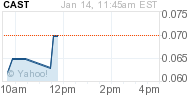 +0.01 +0.01 | +11.11% | ||
| CECO | 3.33 | 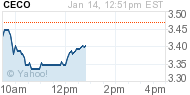 0.00 0.00 | +0.00% | ||
| COCO | 2.53 | 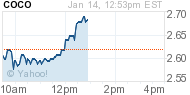 -0.01 -0.01 | -0.39% | ||
| CPLA | 28.65 | 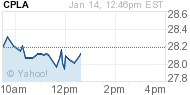 -0.2284 -0.2284 | -0.79% | ||
| DV | 23.73 | 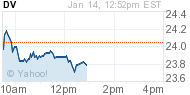 -0.57 -0.57 | -2.35% | ||
| EDMC | 5.00 | 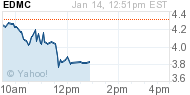 -0.55 -0.55 | -9.91% | ||
| ESI | 17.27 | 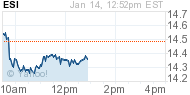 -1.05 -1.05 | -5.73% | ||
| GOOG | 715.63 | 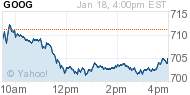 -6.73 -6.73 | -0.93% | ||
| LINC | 5.84 | 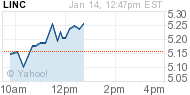 +0.43 +0.43 | +7.95% | ||
| LOPE | 23.63 | 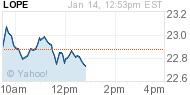 -0.56 -0.56 | -2.32% | ||
| PEDH | 0.17 |  0.00 0.00 | +0.00% | ||
| PSO | 19.41 | 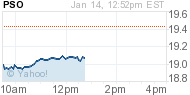 -0.23 -0.23 | -1.17% | ||
| SABA | 8.38 | 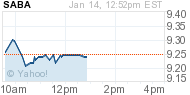 +0.02 +0.02 | +0.24% | ||
| SCHL | 28.66 | 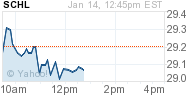 -0.13 -0.13 | -0.45% | ||
| STRA | 56.84 | 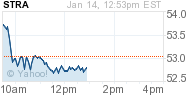 -1.4209 -1.4209 | -2.44% | ||
| WPO | 361.51 | 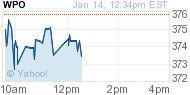 -6.97 -6.97 | -1.89% |
Cost of Education, Domestic, For-Profit, Friend, Fraud, or Fishy, Graduation Rates, Infographics, Recruitment, Required, Universities & Colleges - Dec 18, 2012 6:00 - 0 Comments
Infographic: A Comparison Of For-Profits v. Non-Profit Online College Data
More In For-Profit
- Opinion: How “Shareholder Value” Is Destroying For-Profit, Career Colleges
- Avenues: The World School Opens To Fanfare & Critics Of Elitist High-Tech
- University of Phoenix Is Biggest Spender on Google, $400k Per Day
- Heard: Whistleblower Pops Lid On Deceit At EDMC Schools
- Heard: State Universities’ Online Programs Pummeling For-Profits
Cost of Education Domestic Education Quality For-Profit Opinion Regulatory Required Universities & Colleges
Blended Learning, Continuing Education, Domestic, K-12, Personalized Learning, Required, Technology - Dec 20, 2012 6:00 - 3 Comments
Terry Heick: The iPad’s Past, Present & Future In Learning Environments
More In Technology
- Tom Vander Ark: Wunderkind MOOCs Still A Non-Consumption Trend
- Tom Vander Ark: Education’s 5 Megatrends Of 2012
- Jonathan Mugan: Teaching Your Child To Hack Math
- Guest Column: Move Over Generation X & Y, Say Hello To Generation Z
- Computer Infrastructure Questions Related To Common Core Online Tests
Cost of Education, Domestic, For-Profit, Friend, Fraud, or Fishy, Graduation Rates, Infographics, Recruitment, Required, Universities & Colleges - Dec 18, 2012 6:00 - 0 Comments
Infographic: A Comparison Of For-Profits v. Non-Profit Online College Data
More In Friend, Fraud, or Fishy
- Opinion: How “Shareholder Value” Is Destroying For-Profit, Career Colleges
- The Incredible Expansion Of Charter Schools In American School Districts
- Heard: Whistleblower Pops Lid On Deceit At EDMC Schools
- For-Profit Career Education Corp. To Close 23 Campuses
- Opinion: How The GI Bill Fails Soldiers And Lines For-Profit College Pockets
Domestic Friend, Fraud, or Fishy Opinion Recruitment Regulatory Required Universities & Colleges


Leave a Reply